

2026 Vietnam Money Exchange Guide | VND to USD, Cash, ATM Withdrawals & Credit Cards
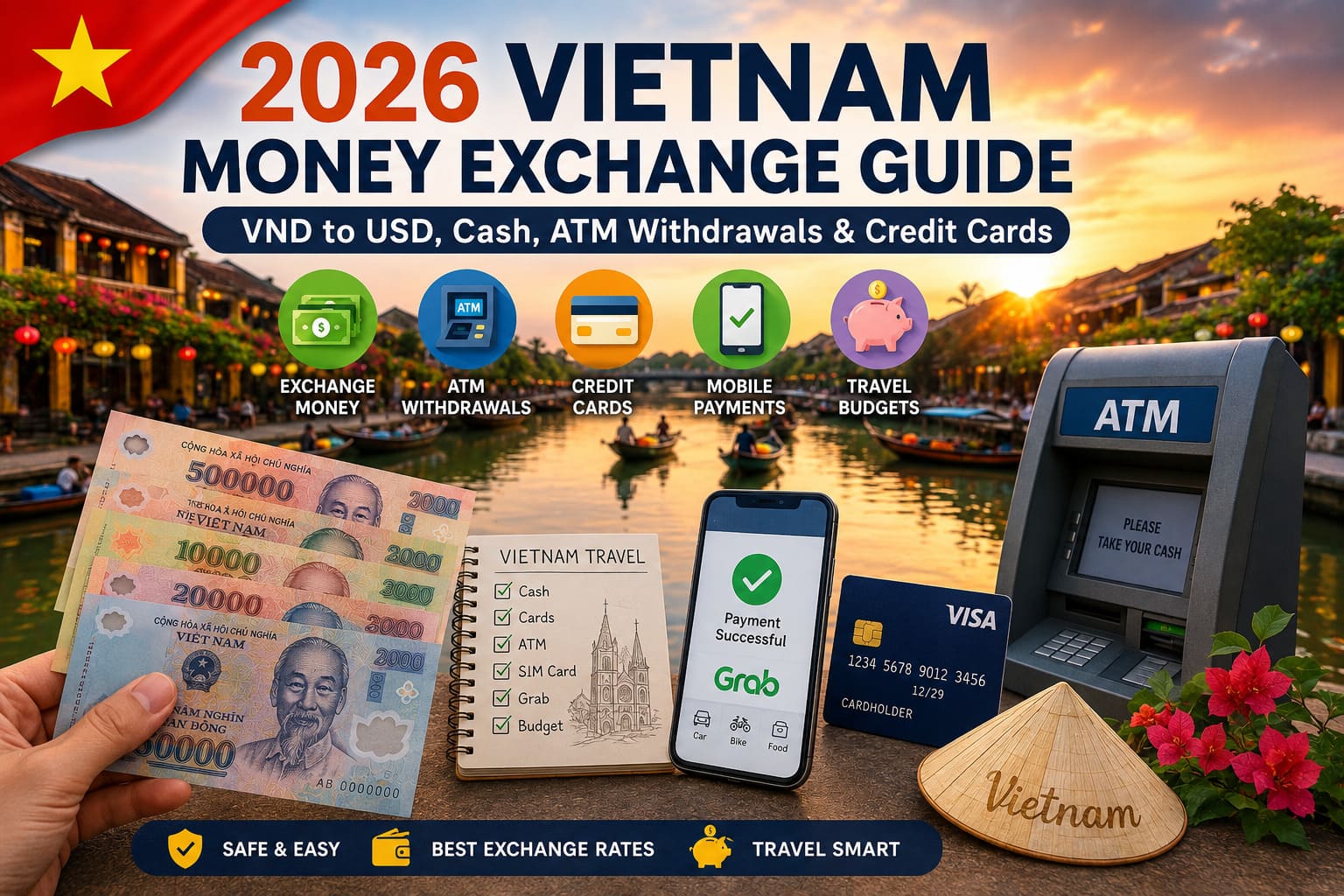
Planning your first trip to Vietnam and wondering how much money you should bring? Can you use credit cards in Vietnam? Should you exchange money before arrival, bring US dollars, or withdraw Vietnamese Dong from an ATM after landing?
Vietnam is generally an affordable destination for international travelers, but money matters can feel confusing at first. The Vietnamese Dong has large numbers, cash is still widely used, and payment habits can be very different from countries such as the United States, Canada, Australia, the United Kingdom, Singapore, or Europe.
This 2026 Vietnam money exchange guide explains everything you need to know before departure, including VND to USD conversion, how much cash to prepare, ATM withdrawals, credit card payments, Grab payment methods, airport exchange tips, and daily travel budgets for Hanoi, Ho Chi Minh City, Da Nang, Hoi An, Nha Trang, and Phu Quoc.
What Currency Does Vietnam Use?
Vietnam uses the Vietnamese Dong, usually written as VND. Most local payments in Vietnam are made in Vietnamese Dong, including food, transportation, markets, small cafés, local attractions, and tips.
Common Vietnamese banknotes include:
- 10,000 VND
- 20,000 VND
- 50,000 VND
- 100,000 VND
- 200,000 VND
- 500,000 VND
Quick Travel Tip
The numbers may look large, but Vietnamese Dong is easy to understand once you remember a few basic conversions.
100,000 VND ≈ US$4
500,000 VND ≈ US$20
1,000,000 VND ≈ US$40
For daily travel, 50,000 VND, 100,000 VND, and 200,000 VND notes are usually the most useful. The 500,000 VND note is common, but some small vendors may not have enough change.
VND to USD Conversion: How to Calculate Vietnamese Dong
Exchange rates change every day, but for travel budgeting, you can use a simple estimate:
Vietnamese Dong to US Dollar
- 50,000 VND ≈ US$2
- 100,000 VND ≈ US$4
- 200,000 VND ≈ US$8
- 500,000 VND ≈ US$20
- 1,000,000 VND ≈ US$40
- 5,000,000 VND ≈ US$200
Easy Calculation Formula
A simple way to estimate prices:
Remove three zeros, then multiply by about 0.04.
Example:
500,000 VND → 500 × 0.04 ≈ US$20
This formula is not perfect because exchange rates change, but it is very useful when checking prices at restaurants, cafés, markets, convenience stores, or tourist attractions.
How Much Money Should You Bring to Vietnam?
The amount of money you need depends on your travel style. A backpacker eating mostly street food will spend much less than a traveler booking private guides, car services, premium restaurants, rooftop bars, spa treatments, and beach resorts.
The following estimates do not include international flights or hotel costs. They are designed for daily travel spending, including food, local transportation, entrance fees, drinks, small shopping, tips, and activities.
3 Days 2 Nights
US$200–350
Best for a short city break in Hanoi, Ho Chi Minh City, or Da Nang.
This budget is suitable for travelers who plan to enjoy local food, use Grab, visit city attractions, and keep shopping limited.
5 Days 4 Nights
US$350–600
This is the most common budget range for first-time visitors to Vietnam.
It is suitable for a comfortable city trip with local food, cafés, Grab rides, several paid attractions, one or two spa experiences, and moderate shopping.
7 Days 6 Nights
US$600–1,000
Best for travelers visiting two cities or combining city travel with beach destinations.
This budget is more comfortable if you plan to visit Hanoi and Da Nang, Ho Chi Minh City and Phu Quoc, or Da Nang and Hoi An.
Comfort or Premium Travel
US$1,000+
Recommended if you plan to book private tours, car services, high-end restaurants, luxury spa treatments, beach resorts, shopping, or nightlife.
How Much Cash Should You Prepare for Vietnam?
Credit cards are accepted in many hotels, shopping malls, restaurants, supermarkets, and airport shops. However, Vietnam is still a cash-friendly country, especially for local experiences.
You will often need cash for:
- Street food
- Local cafés
- Traditional markets
- Night markets
- Small attractions
- Short-distance rides
- Tips
- Local vendors
- Some Grab rides
3 Days 2 Nights
Recommended cash:
US$100–200
Enough for meals, local rides, tips, small purchases, and emergency cash.
5 Days 4 Nights
Recommended cash:
US$200–350
A practical cash amount for most first-time travelers.
7 Days or More
Recommended cash:
US$350–600
Recommended for longer trips, multi-city travel, beach destinations, and travelers who prefer paying in cash.
The best strategy is not to carry all your money in cash. Use a mix of cash, credit cards, and ATM withdrawals for better safety and flexibility.
Should You Exchange Money Before Arriving in Vietnam?
You do not need to exchange all your travel money before arriving in Vietnam. In fact, many travelers prefer to bring some US dollars and exchange money after arrival, or withdraw Vietnamese Dong from an ATM.
Option 1: Exchange a Small Amount Before Arrival
This is useful if you want peace of mind when landing.
- Good for airport transportation.
- Useful for buying a SIM card, drinks, or snacks.
- Helpful if you arrive late at night.
- Recommended for first-time visitors.
Suggested amount:
US$50–100 worth of VND
Option 2: Bring US Dollars and Exchange in Vietnam
US dollars are widely accepted at exchange shops in major cities.
- Exchange rates are often better in the city than at the airport.
- US dollars are easy to exchange in Hanoi, Ho Chi Minh City, Da Nang, and Nha Trang.
- Clean and newer US$100 bills often receive better rates.
Option 3: Withdraw Vietnamese Dong from an ATM
ATM withdrawals are convenient in major cities and tourist areas.
- Good for travelers who do not want to carry too much cash.
- Useful for long trips.
- Easy to manage your spending during the trip.
How Much Does Hanoi Cost Per Day?
Hanoi is one of the most budget-friendly major cities in Vietnam. It is famous for street food, traditional coffee, cultural attractions, and walkable old streets.
🍜 Food & Drinks
300,000–700,000 VND
About US$12–28
🚕 Transportation
100,000–300,000 VND
About US$4–12
🎫 Attractions & Experiences
200,000–600,000 VND
About US$8–24
💰 Suggested Daily Budget
US$40–90
This is enough for local meals, coffee, Grab rides, entrance fees, and a relaxed day in the city.
Part 1 Summary
Best Money Setup for First-Time Visitors
- Prepare a small amount of VND before arrival.
- Bring some clean US dollars as backup.
- Use credit cards at hotels, malls, and larger restaurants.
- Use cash for street food, markets, tips, and small shops.
- Use ATM withdrawals if you need more cash during the trip.
How Much Does Ho Chi Minh City Cost Per Day?
Ho Chi Minh City is Vietnam's largest and most dynamic city. It is famous for rooftop bars, coffee culture, shopping malls, local markets, nightlife, and international restaurants. Overall, Ho Chi Minh City is slightly more expensive than Hanoi, especially if you enjoy nightlife, spa treatments, or shopping.
🍜 Food & Drinks
400,000–900,000 VND
About US$16–36
🚕 Transportation
100,000–400,000 VND
About US$4–16
🎫 Attractions & Experiences
300,000–800,000 VND
About US$12–32
💰 Suggested Daily Budget
US$45–100
This budget covers meals, coffee shops, Grab rides, museums, and moderate shopping. Travelers who enjoy rooftop bars or luxury experiences should expect to spend more.
How Much Does Da Nang Cost Per Day?
Da Nang is one of the most popular beach destinations in Vietnam. With beautiful beaches, seafood restaurants, Ba Na Hills, and easy access to Hoi An, Da Nang is ideal for couples, families, and first-time visitors.
🍜 Food & Drinks
300,000–800,000 VND
About US$12–32
🚕 Transportation
100,000–500,000 VND
About US$4–20
🎫 Attractions & Experiences
300,000–1,000,000 VND
About US$12–40
💰 Suggested Daily Budget
US$40–100
Travelers visiting Ba Na Hills, taking private tours, or enjoying seafood dinners may need a higher daily budget.
How Much Does Hoi An Cost Per Day?
Hoi An Ancient Town is one of Vietnam's most charming destinations and a UNESCO World Heritage Site. Visitors love the lantern-lit streets, riverside cafés, tailor shops, and romantic atmosphere.
🍜 Food & Drinks
300,000–700,000 VND
About US$12–28
🚕 Transportation
100,000–300,000 VND
About US$4–12
🎫 Attractions & Experiences
200,000–800,000 VND
About US$8–32
💰 Suggested Daily Budget
US$40–90
Hoi An is ideal for slow travel, café hopping, cycling, lantern boat rides, and exploring nearby beaches.
How Much Does Nha Trang Cost Per Day?
Nha Trang is one of Vietnam's top beach destinations, famous for island tours, seafood, mud baths, and luxury resorts. It offers a good balance between relaxation and entertainment.
🍜 Food & Drinks
300,000–900,000 VND
About US$12–36
🚕 Transportation
100,000–300,000 VND
About US$4–12
🎫 Attractions & Experiences
500,000–1,200,000 VND
About US$20–48
💰 Suggested Daily Budget
US$50–120
Island hopping, snorkeling, mud baths, and beach resorts can increase your daily expenses.
How Much Does Phu Quoc Cost Per Day?
Phu Quoc Island has become one of Vietnam's most popular luxury destinations. It offers beautiful beaches, cable cars, VinWonders, Safari, island tours, and many five-star resorts.
🍜 Food & Drinks
400,000–1,000,000 VND
About US$16–40
🚕 Transportation
200,000–500,000 VND
About US$8–20
🎫 Attractions & Experiences
500,000–1,500,000 VND
About US$20–60
💰 Suggested Daily Budget
US$60–150
Luxury resorts, private tours, island-hopping trips, and premium restaurants may increase your budget significantly.
Which City Is the Most Affordable?
🏆 Hanoi
US$40–90 per day
Excellent street food and affordable prices make Hanoi one of the best-value destinations in Vietnam.
🏙 Ho Chi Minh City
US$45–100 per day
Great for nightlife, shopping, and modern city experiences.
🏖 Da Nang
US$40–100 per day
Perfect for families, couples, and beach vacations.
🌊 Nha Trang
US$50–120 per day
Excellent for relaxation, island tours, and beach activities.
🌅 Phu Quoc Island
US$60–150 per day
Luxury resorts and premium experiences make Phu Quoc the most expensive destination among Vietnam's major tourist cities.
Recommended Payment Strategy
⭐⭐⭐⭐⭐ Best Combination for Travelers
- 40% Cash
- 50% Credit Cards
- 10% ATM Withdrawals as Backup
This combination provides the best balance between convenience, safety, and flexibility.
For most travelers visiting Vietnam for 5 days and 4 nights, a total travel budget of US$350–600 combined with cash, credit cards, and ATM withdrawals is usually enough for a comfortable and enjoyable trip.
How to Exchange Money in Vietnam?
One of the most common questions first-time visitors ask is whether they should exchange all their money before arriving in Vietnam. The answer is no.
Most experienced travelers recommend using a combination of cash, credit cards, and ATM withdrawals rather than carrying large amounts of cash.
⭐⭐⭐⭐⭐ Recommended Money Strategy
40% Cash + 50% Credit Cards + 10% ATM Withdrawals
This combination provides flexibility, better security, and protection against unfavorable exchange rates.
Should You Exchange Money Before Arriving in Vietnam?
Option 1: Exchange Some Vietnamese Dong Before Departure
This option is ideal for first-time visitors.
- Useful for airport transportation.
- Convenient for buying drinks, snacks, or SIM cards.
- Provides peace of mind after arrival.
Suggested amount:
US$50–100 worth of VND
Option 2: Bring US Dollars and Exchange Money in Vietnam
US dollars are widely accepted by exchange shops in Vietnam.
- Better exchange rates in major cities.
- Very convenient in Hanoi, Ho Chi Minh City, Da Nang, and Nha Trang.
- Ideal for longer trips.
Option 3: Use ATMs After Arrival
ATMs are widely available throughout Vietnam.
- Convenient and secure.
- No need to carry large amounts of cash.
- Great for long-term travelers.
Is It Better to Bring US Dollars?
Many experienced travelers prefer bringing US dollars because exchange shops in Vietnam often offer competitive rates for USD.
Advantages of Bringing US Dollars
- Widely accepted by exchange shops.
- Often offers better exchange rates.
- Useful for emergencies.
- Easy to exchange in major tourist cities.
Important Tips
- Bring clean, undamaged bills.
- Newer bills are preferred.
- US$100 notes usually receive the best rates.
- Avoid damaged or written-on bills.
Are ATMs Easy to Find in Vietnam?
Yes. ATMs are available everywhere in major tourist destinations, including Hanoi, Ho Chi Minh City, Da Nang, Hoi An, Nha Trang, and Phu Quoc.
Popular Vietnamese Banks
- Vietcombank
- BIDV
- Techcombank
- VPBank
- TPBank
- ACB
- Sacombank
ATM Withdrawal Tips
- Notify your bank before traveling.
- Enable international ATM withdrawals.
- Know your daily withdrawal limit.
- Use ATMs attached to banks whenever possible.
- Avoid withdrawing money late at night.
- Store your cash immediately after withdrawal.
Can You Use Credit Cards in Vietnam?
Yes. Credit card acceptance has improved significantly in recent years, especially in major cities and tourist destinations.
Places That Usually Accept Credit Cards
- Hotels and resorts
- Shopping malls
- Large restaurants
- Coffee chains
- Supermarkets
- Convenience stores
- Airports
- Spa and massage centers
Places That Usually Require Cash
- Street food vendors
- Night markets
- Traditional markets
- Small cafés
- Local shops
- Tips
- Some Grab rides
Always Choose VND When Paying by Card
Some payment terminals may ask whether you want to pay in:
- VND (Vietnamese Dong)
- USD (US Dollar)
- Your home currency
Why Choose VND?
Choosing USD or your home currency may trigger Dynamic Currency Conversion (DCC), which often results in poor exchange rates and extra fees.
Paying in VND allows your bank or credit card company to provide a better conversion rate.
Does Grab Accept Credit Cards?
Yes. Grab is the most popular ride-hailing app in Vietnam and supports several payment methods.
Grab Payment Options
- Credit cards
- Cash
- Digital wallets (limited availability)
We recommend downloading Grab before your trip and linking your credit card in advance.
Where Should You Always Carry Cash?
🍜 Street Food
Pho, banh mi, local coffee, and small restaurants often only accept cash.
🛍 Traditional Markets
Markets such as Ben Thanh Market and Han Market usually operate on a cash basis.
🚕 Grab Cash Payments
Some drivers prefer cash payments, especially for shorter rides.
💆 Spa Tips
Tips are usually paid in cash.
🏛 Small Attractions
Temples, local museums, and smaller attractions may only accept cash.
Best Payment Strategy for First-Time Visitors
⭐⭐⭐⭐⭐ Most Recommended Setup
40% Cash + 50% Credit Cards + 10% ATM Withdrawals
✔ Safe and convenient.
✔ No need to carry large amounts of cash.
✔ Flexible for different travel styles.
✔ Works well in Hanoi, Ho Chi Minh City, Da Nang, Hoi An, Nha Trang, and Phu Quoc.
✔ Ideal for first-time visitors to Vietnam.
For most travelers, there is no need to exchange all your money into Vietnamese Dong before arriving. A combination of cash, credit cards, and ATM withdrawals provides the most convenient and secure travel experience in Vietnam.
Money Exchange Tips for Vietnam
Exchanging money in Vietnam is generally easy, but first-time visitors should understand a few important tips before traveling. A little preparation can help you avoid poor exchange rates, unnecessary fees, and common mistakes.
✅ Don't Exchange All Your Money at Once
There's no need to convert your entire travel budget into Vietnamese Dong before arriving.
Instead, exchange enough money for your first day and use ATMs or exchange shops later if necessary.
This approach reduces the risk of carrying too much cash and gives you more flexibility.
✅ Keep Your Cash in Different Places
Avoid keeping all your cash in one wallet.
- Main wallet
- Backpack hidden pocket
- Hotel safe
- Luggage compartment
Only carry the amount you need for the day.
✅ Carry Small Bills
Large 500,000 VND notes are common, but small vendors may not have enough change.
Useful denominations include:
- 20,000 VND
- 50,000 VND
- 100,000 VND
These smaller bills are perfect for street food, coffee shops, taxis, and tips.
Should You Exchange Money at the Airport?
Yes, but only a small amount.
✈ Advantages of Airport Exchange
- Convenient after arrival.
- Useful for transportation and small purchases.
- Good for buying SIM cards or drinks.
⚠ Disadvantages of Airport Exchange
- Exchange rates are often worse.
- Fees may be higher.
- Not ideal for exchanging large amounts.
A good strategy is to exchange only US$50–100 worth of Vietnamese Dong at the airport and exchange more money later in the city.
Where to Exchange Money in Hanoi?
Hanoi offers many exchange options, especially around the Old Quarter.
📍 Recommended Areas
- Hoan Kiem Lake
- Old Quarter
- Banks
- Licensed exchange shops
- Gold shops
Compare rates from two or three places before exchanging larger amounts.
Where to Exchange Money in Ho Chi Minh City?
📍 Recommended Locations
- District 1
- Ben Thanh Market area
- Nguyen Hue Walking Street
- Banks
- Licensed money changers
Where to Exchange Money in Da Nang?
📍 Popular Areas
- Han Market
- My Khe Beach area
- City center
- Banks
- Hotels and exchange shops
Does Vietnam Have a Tipping Culture?
Unlike the United States, tipping is not mandatory in Vietnam. However, tipping has become increasingly common in the tourism industry.
💆 Spa and Massage
Suggested tip:
50,000–100,000 VND
Approximately US$2–4.
🧳 Hotel Porters
Suggested tip:
20,000–50,000 VND
Approximately US$1–2.
🚗 Private Drivers
Suggested tip:
100,000 VND or more
👨💼 Private Guides
Tips are optional and depend on the quality of service.
Money-Saving Tips in Vietnam
🚕 Use Grab Instead of Taxis
Grab offers transparent pricing and helps avoid overcharging.
🍜 Enjoy Local Food
Pho, banh mi, Vietnamese coffee, and local restaurants are delicious and affordable.
🏨 Book Hotels Early
Early bookings usually provide better prices and more choices.
📶 Use an eSIM
eSIMs are usually cheaper and more convenient than international roaming.
🚐 Book Private Cars for Groups
Families and groups of 4–7 travelers often save money by booking private transportation.
Common Scams and How to Avoid Them
⚠ Avoid Street Money Changers
Always use banks, hotels, or licensed exchange shops.
⚠ Double-Check 20,000 and 500,000 VND Notes
The colors are similar, and travelers sometimes accidentally hand over the wrong note.
⚠ Count Your Money Before Leaving
Always verify the amount immediately after exchanging money.
⚠ Choose VND When Paying by Card
Avoid Dynamic Currency Conversion (DCC), which often gives poor exchange rates.
⚠ Avoid Unofficial Taxis
Use Grab or pre-arranged airport transfers whenever possible.
Advice for First-Time Visitors to Vietnam
✈ First-Time Travelers
- Download Grab before your trip.
- Carry some cash.
- Bring at least two credit cards.
- Don't carry too much money.
- Buy an eSIM before arrival.
👨👩👧 Family Travelers
- Book airport transfers in advance.
- Consider private car services.
- Prepare small bills.
- Avoid last-minute transportation stress.
👴 Senior Travelers
- Consider hiring a private guide.
- Reduce language barriers.
- Enjoy a more comfortable itinerary.
- Avoid transportation confusion.
The Best Payment Strategy for Vietnam
⭐⭐⭐⭐⭐ Recommended Combination
40% Cash + 50% Credit Cards + 10% ATM Withdrawals
✔ Convenient and secure.
✔ Avoid carrying too much cash.
✔ Suitable for Hanoi, Ho Chi Minh City, Da Nang, Nha Trang, Hoi An, and Phu Quoc.
✔ Ideal for first-time travelers.
For most visitors, the best approach is to combine cash, credit cards, and ATM withdrawals. This provides flexibility, better security, and peace of mind throughout your trip to Vietnam.
Frequently Asked Questions About Money in Vietnam
Q1: Should I exchange Vietnamese Dong before traveling to Vietnam?
Yes, but only a small amount. Having some Vietnamese Dong when you arrive is useful for airport transportation, food, drinks, or buying a SIM card. Most travelers exchange more money later or use ATMs.
Q2: How much money should I bring for 5 days in Vietnam?
For most travelers, a comfortable budget is:
US$350–600
Luxury travelers, shoppers, and those booking private tours may need a larger budget.
Q3: Is Vietnam expensive?
Compared with the United States, Canada, Australia, Singapore, and Europe, Vietnam is still considered an affordable destination. Food, transportation, and accommodation are generally cheaper than in many Western countries.
Q4: Can I use US dollars in Vietnam?
Daily transactions are almost always made in Vietnamese Dong. Although some hotels may accept US dollars, travelers should use VND for most purchases.
Q5: Are ATMs easy to find in Vietnam?
Yes. ATMs are widely available in Hanoi, Ho Chi Minh City, Da Nang, Hoi An, Nha Trang, and Phu Quoc.
Q6: Are credit cards widely accepted?
Yes. Hotels, shopping malls, restaurants, supermarkets, and airports usually accept Visa and Mastercard. Small businesses and street vendors often prefer cash.
Q7: Does Grab accept credit cards?
Yes. Grab supports credit cards and cash payments. Linking your card before traveling is highly recommended.
Q8: Should I choose USD or VND when paying by card?
Always choose Vietnamese Dong (VND). Selecting USD may trigger Dynamic Currency Conversion (DCC), which often results in poor exchange rates.
Q9: Is tipping required in Vietnam?
No. Tipping is optional, but it is appreciated in spas, hotels, private tours, and transportation services.
Q10: Is Vietnam safe for tourists?
Vietnam is generally safe. However, travelers should protect valuables, avoid carrying large amounts of cash, and remain aware of common tourist scams.
Q11: Is it better to bring cash or use credit cards?
Both are important. Most experienced travelers recommend using a combination of cash, credit cards, and ATM withdrawals.
Q12: Should I exchange money at the airport?
Only a small amount. Airport exchange rates are usually less favorable than those in city centers.
Q13: Can I survive in Vietnam without cash?
Not entirely. Although card payments are becoming more common, cash is still necessary for street food, local markets, tips, and many small businesses.
Q14: Which city is the most affordable in Vietnam?
Hanoi is generally the most budget-friendly major city, while Phu Quoc is usually the most expensive destination due to luxury resorts and island activities.
Q15: What is the best payment method for Vietnam?
40% Cash + 50% Credit Cards + 10% ATM Withdrawals
This combination provides convenience, flexibility, and security for most travelers.
Recommended Travel Services for First-Time Visitors
Besides preparing your money and budget, transportation and itinerary planning are equally important for a smooth trip.
🚐 Airport Transfers
Ideal for late-night flights, families, and travelers who want a stress-free arrival experience.
🚗 Private Car Services
Perfect for families and groups who want comfort and flexibility while exploring Vietnam.
👨💼 Private Guides
First-time visitors can enjoy local culture, food, and attractions more easily with the help of a professional guide.
💬 Online Travel Concierge
Get assistance with transportation, restaurant reservations, and travel questions during your trip.
Recommended Reading
- 2026 Vietnam Grab Guide | How to Use Grab, Payment Methods & Airport Transfers
- 2026 Vietnam Travel Checklist | Everything You Need Before Departure
- 2026 Vietnam eSIM Guide | Best Data Plans and Recommendations
- 2026 Vietnam Tipping Guide | Hotels, Drivers, Guides & Spa Etiquette
- 2026 Vietnam Visa Guide | Requirements and Application Process
Final Thoughts: How Much Money Should You Bring to Vietnam?
Vietnam remains one of the best-value destinations in Asia. For most travelers, a budget of US$350–600 for a 5-day trip is enough for a comfortable experience.
If you plan to enjoy luxury hotels, rooftop bars, shopping, spa treatments, private tours, or island-hopping activities, you may want to increase your budget accordingly.
⭐⭐⭐⭐⭐ Best Money Setup for Vietnam
40% Cash + 50% Credit Cards + 10% ATM Withdrawals
✔ Safe and flexible.
✔ Avoid carrying too much cash.
✔ Works perfectly in Hanoi, Ho Chi Minh City, Da Nang, Hoi An, Nha Trang, and Phu Quoc.
✔ Ideal for first-time visitors to Vietnam.
🇻🇳 Start Planning Your Vietnam Adventure
PlayfulTours provides:
- ✔ Private Guides in Vietnam
- ✔ Airport Transfers
- ✔ Private Car Services
- ✔ Online Travel Concierge Support
- ✔ Customized Travel Planning
Whether you're visiting Vietnam for the first time or planning a deeper adventure, we're here to help make your journey easier, safer, and more enjoyable.
Need a private guide to explore Vietnam?
Playful Tours offers private guides and local companions in Hanoi, Ho Chi Minh City, Da Nang and Hoi An. Choose the right guide based on your travel date, language and needs.